









APAC CIOOutlook
About UsConferencePartner With Us
  • Technologies
    • Blockchain
      Data Intelligence and Management
      Digital Transformation
      FinTech
      Generative and Agentic AI
      Low Code No Code
      Mobile Application
      Networking
      Robotics
      Storage
      Wireless
  • Industries
    • Automotive
      Aviation
      Banking
      Construction
      E-Commerce
      Food and Beverages
      Healthcare
      Insurance
      Logistics
      Manufacturing
      Retail
      Supply Chain
      Travel and Hospitality
  • Platforms
    • Microsoft
      Salesforce
      SAP
  • Strategic Solutions
    • Business Intelligence
      Contact Center
      Corporate Finance
      CRM
      Cyber Security
      Data Center
      Enterprise Asset Management
      Enterprise Performance Management
      IT Infrastructure and Services
      Managed Services
      Procurement
      Unified Communication
      Workflow
  • Home
  • CXO Insights
  • Leadership Perspectives
  • Innovation Insights
  • Research
  • News
  • Whitepapers
  • CXO Awards
#

Apac CIOOutlook Weekly Brief

×

Be first to read the latest tech news, Industry Leader's Insights, and CIO interviews of medium and large enterprises exclusively from Apac CIOOutlook

Subscribe

loading

THANK YOU FOR SUBSCRIBING

  • Home
Editor's Pick (1 - 4 of 8)
left
Three Innovative Approaches for a Cost-Effective IT Infrastructure

Julia Davis, SVP and CIO, Aflac

Software Defined Networks and Network Function Virtualization

Massimo Rapparini, CIO, Viavi Solutions

Virtualize, But Verify

Prayson Pate, CTO & SVP of R&D, Overture Networks

A New Vision for Data Visualization: Marrying Data Science and User Experience Design

Josh Markowitz, Senior Director-Head of Experience Design, Synechron

Think Chip Shots, not Moon Shots when it comes to SD-WANs

Zeus Kerravala, Founder & Principal Analyst at ZK Research, for Silver Peak

Should We Virtualize Functions or Virtualize Networks?

David Hughes, Founder and CEO of Silver Peak

SaaS, Cloud Application, and Security

John Ang, Director of IT & Education Technology, The Learning Lab, Singapore

Virtualization- 'Real' need in 5G networks and IoT

Kalyan Sundhar, VP-Mobility, Virtualization, Assessment And Media, Ixia

right

A-Z of Today's Virtualization Needs

Andrew Hatfield, Practice Lead-Cloud Storage and Big Data, Red Hat

Tweet
content-image

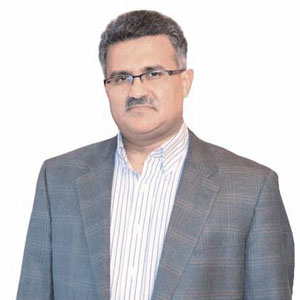
Andrew Hatfield, Practice Lead-Cloud Storage and Big Data, Red Hat

With over 75 per cent of datacentre workloads now virtualised, what is left to innovate? On the other hand, with such a massive push towards “cloud”, does virtualisation still have a place in an enterprise IT strategy?

Virtualisation in the x86 server space that entered our hearts and minds in the mid 2000s, starting as most disruptive technologies do, in development/testing and the edge of the datacentre. As the technology matured, so did adoption and its increased pace to rule the majority of workloads that run enterprise datacentres. So began Phase I in earnest.

Where there used to be hesitancy trusting virtualisation with mission critical or resource hungry workloads, we often now have to justify not virtualising new workloads. And rightly so, as it has provided many direct and indirect benefits–whether it is the primary selling point of increased hardware utilisation or simply making hardware maintenance easier by abstracting away vendor specific tie-ins–virtualisation has radically changed how we operate datacentres and manage workloads. As the market increased in value, so did the competition to the point where now all major infrastructure vendors have an enterprise virtualisation solution. The hypervisor itself is now largely a commodity and the value is in the complete management and lifecycle of workloads. This was the major change for Phase II.

One could argue the Golden Age of Virtualisation has passed, especially now that there is so much focus on cloud, both public and private, containers, serverless computing, IoT, and other whizbang computing paradigms that operate above the IaaS layer. However, I posit that we are now entering Phase III of the Virtualisation era and it still has a long and healthy life to live.

Without the success of virtualisation, it would be fair to say we would likely not have cloud as we know it today, or for it to be so prevalent so quickly. Does this mean that virtualisation no longer has a place in our strategic plans for workload placement and lifecycle management? Not at all.

We are Now Entering Phase III Of The Virtualisation Era and it Still has a Long And Healthy Life to Live

In fact, I’d argue virtualisation is more important than ever before. As workloads begin to span both traditional and cloud architectures, virtualisation has an increasingly important role to play.

Virtualisation in the Phase III era needs to be more responsive, agile and valuable. Just as there are still some workloads that aren’t suitable for virtualisation, so it is that not all workloads are suitable for cloud deployment. This could be because of the application architecture, licensing or cost implications or simply the time it would take to re-platform. In addition, there has always been dubious value in the lift-and-shift strategy, even when it was physical to virtual, even more so now from traditional to cloud.

So how can virtualisation continue to add value in this Phase III world dominated by cloud migrations, public cloud vendors and private cloud tussles? By understanding the value it brings and knowing the workloads that best suit virtualisation vs cloud (and not to forget the PaaS layer either). Connectivity and workload intelligence are keys to surviving in today’s ever more challenging and competitive commercial landscape. Tomorrow you could be faced with a new competitor unleashed from stealth mode, unburdened with your decades of technical debt. Or you may simply be struggling with the skills gap and network management headaches of what you are told are vastly different technologies.

With Phase III virtualisation, enterprises need more than a simple hyper-visor, they need an enterprise wide integrated solution.

Integration with identity systems, lifecycle management tools, deployment and automation platforms, billing and accounting interfaces. The ability to live with the old and new alike and just keep on ticking away; processing those transactions, shipping those messages, learning from your data lakes.

Traditional virtualisation solutions are still dominated by manual control systems, managed by typically vertically siloed teams with limited cross functional skill sets or political power.

Today developers need access to resources quickly, effortlessly and without bureaucratic red-tape. “Give me a big box with all the things I need and a quota and I’ll leave you alone”, is kind of the idea that has taken place in the DevOps world.

Cloud is delivering this just as containers and PaaS are beginning to roll-out. But, not all workloads fit these New Sexy Cool technologies. This is where Phase III virtualisation is the key. It needs to understand those new workloads, the new empowered developer, to integrate with the traditional datacentre and enable reuse of new toolsets.

Virtualisation systems that purely provide a virtual machine after an approval process and little else are no longer valuable to an enterprise. Virtualisation systems that provide deep integration with containers and PaaS, that integrate with identity systems and automation platforms and can share software defined resources such as networks, storage and image repositories are what we need today.

Can your virtualisation solution provide all of that? Because if it can’t, you’re going to be disrupted and left behind.

tag

IoT

Weekly Brief

loading
Top 10 Virtualization Solution Providers - 2017
Featured Issue

I agree We use cookies on this website to enhance your user experience. By clicking any link on this page you are giving your consent for us to set cookies. More info

APAC CIOOutlook
Follow on LinkedIn

About

  • Home
  • About Us
  • Partner With Us

Stay Connected

  • Subscribe
  • Newsletter
  • Sitemap

Contact Us

  • editor@apacciooutlook.com
  • sales@apacciooutlook.com
  • marketing@apacciooutlook.com

Legal

  • Editorial Policy
  • Privacy Policy
  • Terms of Use

© 2026 APAC CIOOutlook. All rights reserved. Headquarteblue in Fort Lauderdale, FL, USA.

This content is copyright protected

However, if you would like to share the information in this article, you may use the link below:

https://virtualization.apacciooutlook.com/cxoinsights/az-of-todays-virtualization-needs-nwid-4627.html